WEST BANK, (Palestine Foundation Information Center), A Palestinian prisoner in Negev prison has lost 39 kilograms of his body weight, while another is suffering from heart disease and spinal disc problems without receiving the necessary treatment, according to a report by the Commission of Detainees and Ex-Detainees Affairs released Monday.
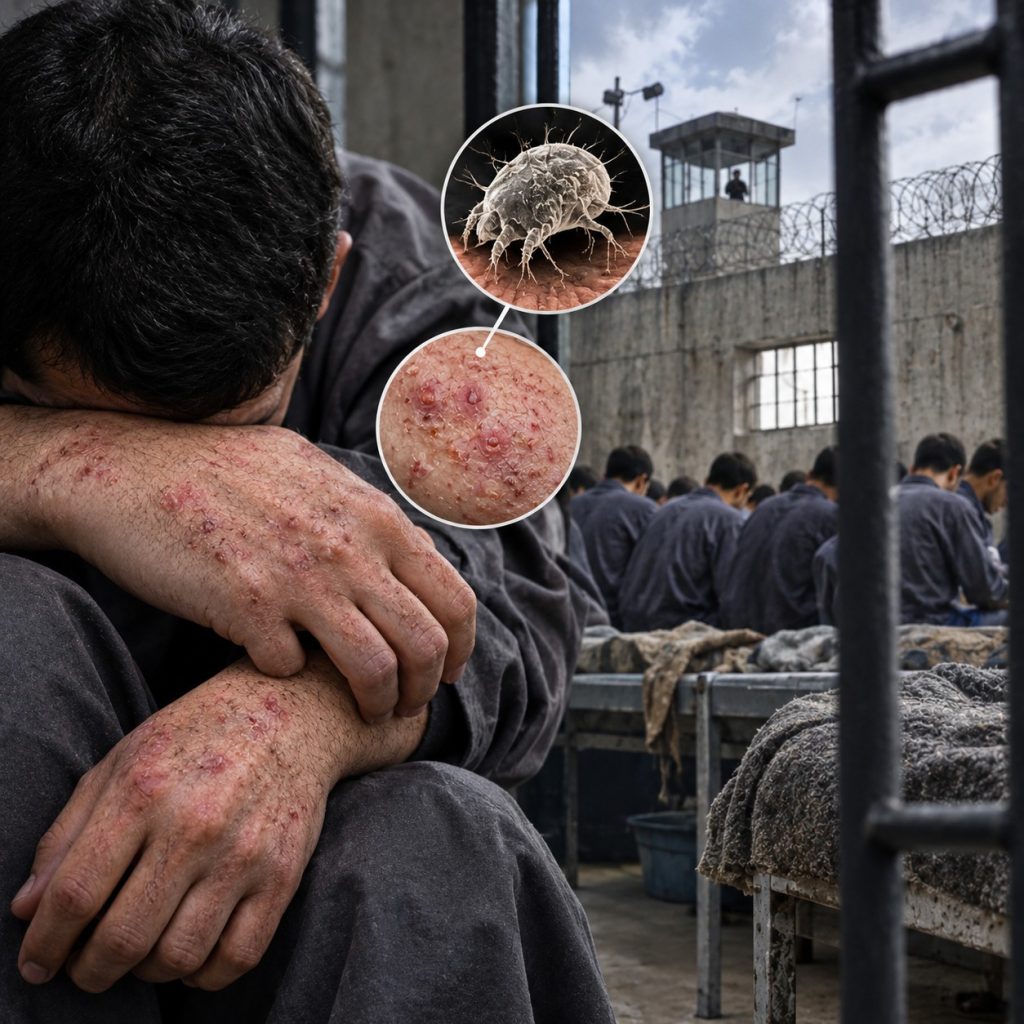
The report revealed deteriorating health conditions among several prisoners amid the spread of scabies and a lack of hygiene supplies and medical care.
The commission’s report was based on visits by its lawyers to several sick prisoners, documenting cases involving chronic illnesses, skin diseases, and significant weight loss under detention conditions that it said exacerbate infections and the suffering of patients.
The commission reported that prisoner Qais al-Habal, 25, from the town of Kharbatha al-Misbah, west of Ramallah, is suffering from a severe case of scabies, accompanied by boils spread across his body. His weight has dropped from 100 kilograms before his arrest to 61 kilograms currently, a loss equivalent to 39% of his previous body weight.
It also revealed the deteriorating health condition of prisoner Mustafa Abu al-Fiyah, 39, from the city of Tulkarem, who suffers from spinal disc problems and heart disease and has lost approximately 14 kilograms.
The commission stressed his urgent need for treatment, accusing the prison administration of showing no concern for his health condition. Abu al-Fiyah is being held under administrative detention, and his current detention order expires on January 2, 2027, unless Israeli occupation authorities renew it.
In the same context, the commission documented scabies infections among prisoner Omar Issawi, 34, from the town of Issawiya in occupied Jerusalem, and prisoner Mufid Saeed, 27, also from Jerusalem.
It said prisoners are living under extremely difficult health and environmental conditions, with a lack of basic personal hygiene facilities and shortages of essential supplies, worsening the spread of skin diseases and infections amid the continuation of a policy of medical neglect and the absence of necessary care.
These accounts come days after a briefing by the Palestinian Prisoner Society (PPS), published on November 8, in which it estimated that approximately 80% of male and female prisoners, including children, were infected with scabies.
The estimate was based on testimonies from prisoners visited by its legal teams and others who had been released. The PPS stressed the absence of effective treatment and the measures necessary to address the causes of the disease’s spread.
At Negev prison specifically, the PPS pointed to a worsening bathing crisis in some sections due to a major malfunction in shower facilities, alongside overcrowding and clothing shortages.
It also cited testimonies indicating that mattresses are removed during daytime hours, forcing prisoners to sit on the floor or on metal beds, increasing the suffering of sick and elderly prisoners, particularly those with bone and limb conditions.
The PPS linked persistent food shortages to the deterioration of prisoners’ physical health, stressing that neither the quantity nor the quality of meals had improved and warning of the consequences of these continuing conditions for their bodies’ ability to endure.
The Palestinian testimonies align with concerns previously raised by the United Nations Committee Against Torture in its concluding observations on Israel, issued in December 2025, regarding reports of excessive weight loss, the denial of basic medical care and medications to detainees, and the spread of scabies amid inadequate detention conditions and insufficient prevention and treatment measures.
The committee called for timely medical care and essential medications, with particular attention to those suffering from chronic illnesses, as well as measures to prevent infectious diseases, detect them early, and treat them.