OCCUPIED JERUSALEM, (Palestine Foundation Information Center), A new study by the Al-Quds International Foundation has documented Israeli policies and practices targeting the Arab Christian presence in occupied Jerusalem, warning that mounting political, economic and religious pressures threaten to further diminish one of the city’s oldest communities.
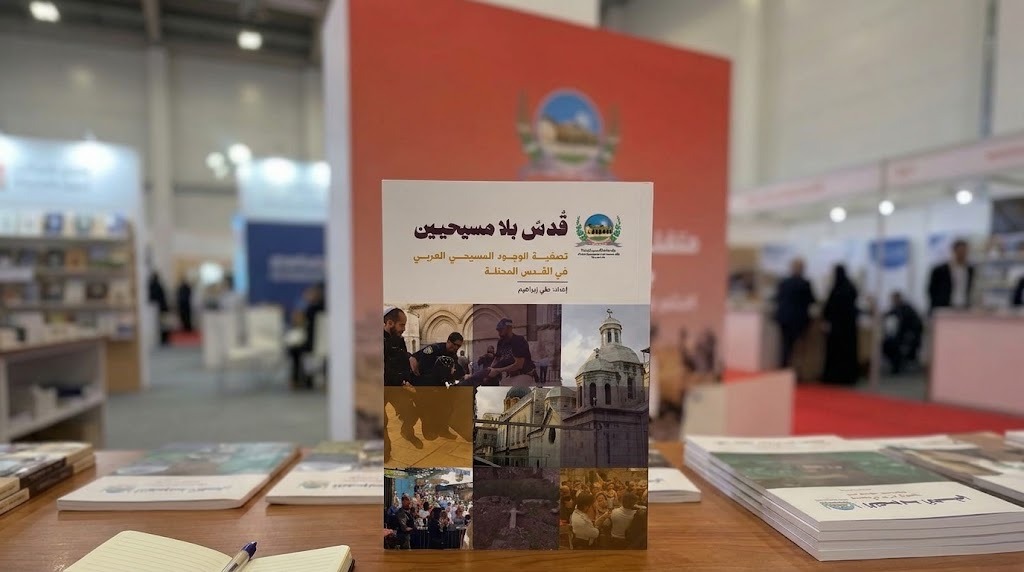
The study, titled Jerusalem Without Christians: The Elimination of the Arab Christian Presence in Occupied Jerusalem — Methods and Objectives, examines measures designed to reduce the Christian population’s presence and weaken its role as an integral part of Palestinian national identity and Jerusalem’s historical, cultural and religious diversity.
Prepared by Jerusalem affairs researcher Ali Ibrahim and reviewed and edited by Dr. Hisham Yaqoub, the study highlights a sharp demographic decline over the past century.
According to its findings, Christians accounted for approximately 25% of Jerusalem’s population in 1922, during the British Mandate, compared with just 1.56% by the end of 2023.
The study estimates that approximately 15,300 Christians lived in Jerusalem’s eastern and western sectors at the end of 2023, including 13,100 Palestinians.
Residency restrictions and demographic pressures
The study identifies several policies that have contributed to the decline of Jerusalem’s Palestinian Christian community.
Among the most significant are Israel’s residency regulations, under which Palestinian residents of occupied East Jerusalem are generally granted permanent residency rather than citizenship.
It also highlights the Israeli Interior Ministry’s policy of revoking residency permits under the so-called “center of life” criterion, which requires residents to demonstrate that Jerusalem remains the center of their personal and family lives.
According to the study, thousands of Jerusalem residents have been affected by residency revocations, while mounting economic and security pressures have encouraged what it describes as silent migration from the city.
The researchers argue that these measures undermine the ability of Palestinian Christians, alongside other Palestinian Jerusalemites, to maintain their homes, livelihoods and community ties.
Church properties and religious freedoms under pressure
The study also examines threats to Christian religious endowments and church-owned properties, which it says account for approximately 28% of endowment lands in occupied East Jerusalem.
It documents attempts to acquire or secure long-term leases on church properties through major transactions involving Israeli settlement organizations.
The researchers also point to financial pressures on churches, including demands for substantial payments under Israel’s arnona municipal property tax.
According to the study, such measures place additional burdens on Christian institutions and threaten their ability to maintain religious, charitable and community activities.
The report further documents increasing attacks and violations affecting Christian clergy, worshipers and religious sites.
These include physical and verbal assaults, severe restrictions on access to the Church of the Holy Sepulcher, and limits on the number of worshipers permitted to participate in major religious observances, particularly Holy Saturday and Easter.
The study argues that these restrictions undermine religious freedoms and weaken the historical Christian presence in Jerusalem.
Threats to Jerusalem’s Palestinian identity
The researchers conclude that the documented policies form part of broader efforts to reshape Jerusalem’s demographic, political, cultural and territorial character.
According to the study, these measures seek to weaken the city’s shared Palestinian national identity, diminish its Arab and multicultural heritage, and reinforce the Israeli narrative of Jerusalem as a unified Jewish city.
The report emphasizes that Palestinian Christians are an inseparable part of Jerusalem’s national and historical identity and that their declining presence threatens the city’s longstanding religious and cultural diversity.
Calls for international action
The study outlines recommendations across legal, documentation, community, diplomatic, institutional and digital initiatives.
It calls for strengthening the resilience of Palestinian Christians, documenting violations and bringing them to the attention of international institutions.
The researchers also recommend expanding cooperation with churches and Christian organizations worldwide to protect religious endowments, historic properties and sacred sites.
Other proposals include strengthening local community institutions, supporting the continued presence of Palestinian Christians and developing coordinated international advocacy efforts.
The study concludes that protecting Jerusalem’s Christian community is essential not only to preserving its religious heritage but also to safeguarding the city’s Palestinian identity and historical diversity.