Secretary-General, Palestine Foundation Pakistan
(Palestine Foundation Information Center), Looking at the current situation in West Asia, particularly the daily statements issued by the US president, it appears that President Donald Trump is under considerable pressure. He makes one statement in the morning, says something different in the afternoon, and comes up with yet another version by night. This pattern of contradictory statements by Trump has once again placed the growing tensions between the United States, Israel, and Iran at the centre of serious threats to international politics and regional security.
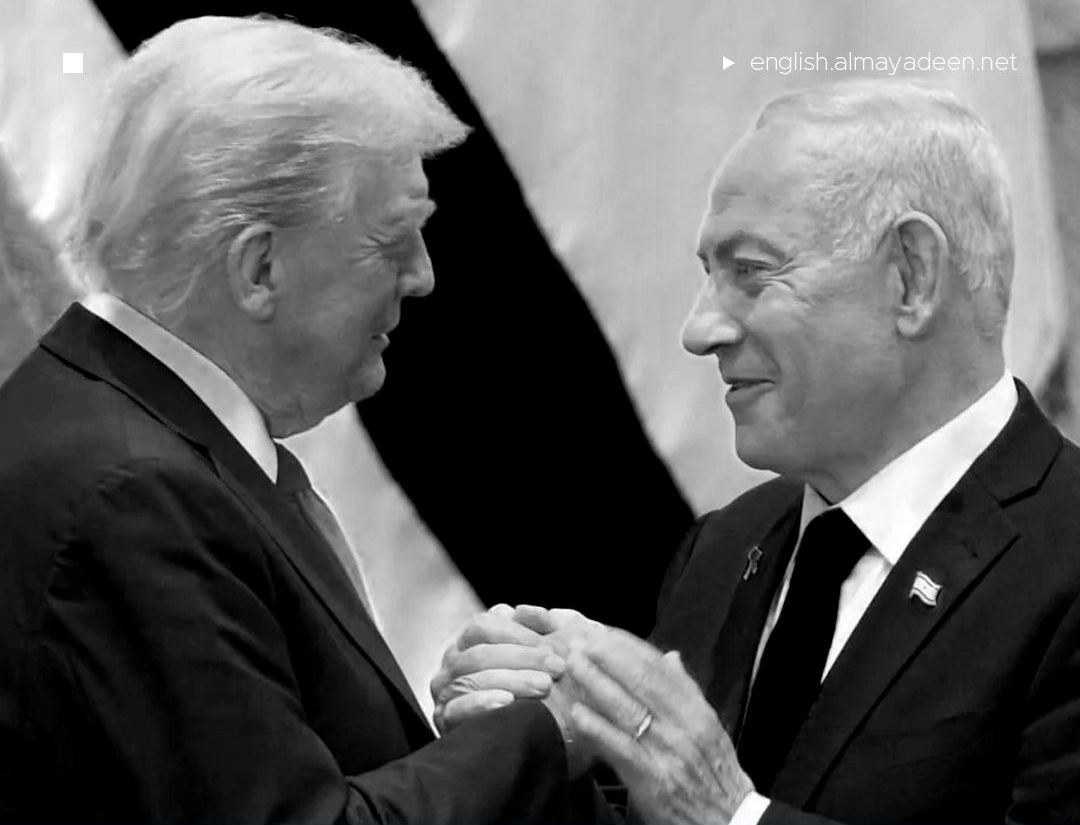
Recent diplomatic and military developments, including telephone conversations between US President Donald Trump and Israeli Prime Minister Benjamin Netanyahu, internal consultations within the Israeli leadership, and meetings between the heads of the US and Israeli intelligence agencies, the CIA and Mossad, have raised concerns about the possibility of a major military operation or a strategy aimed at intensifying pressure in the region. According to observers and critics, these developments appear to be part of a coordinated effort to disrupt the regional balance of power and increase pressure on Iran, potentially posing serious threats to regional peace.
According to media reports published in recent days, tensions reportedly escalated during a telephone conversation between Trump and Netanyahu when the Israeli prime minister urged Trump to launch a major attack on Iran and bring the country to its knees. However, reports suggest that Trump was reluctant to accept Netanyahu’s demand, partly because he was facing political pressure following the recent midterm election defeat. Nevertheless, the two leaders reportedly exchanged harsh and heated remarks over the issue.
Political and military analysts argue that the aggressive policies pursued by Washington and Tel Aviv are fuelling tensions across the region. On the one hand, meetings between Israeli leaders such as Netanyahu and his political rival Gadi Eisenkot reflect internal political and military consultations. On the other, contacts between the heads of the CIA and Mossad indicate possible joint planning at the intelligence and military levels. Critics describe this situation as an expression of the warmongering of the United States and Israel. They argue that choosing military pressure and threats over negotiations and diplomacy has proved disastrous for the region in the past and could have dangerous consequences for the global economy and international peace in the future.
Similarly, Netanyahu and his political rival Eisenkot also held a lengthy meeting lasting two hours. However, the statement issued to the media following this extended meeting was remarkably brief, making the situation even more suspicious. Political observers believe that the two political opponents may also have reached an understanding on the need to attack Iran, as they consider Iran’s continued emergence as a powerful country a potential threat to Israel.
On the other hand, Iran has responded firmly to these developments. Iranian military and political leaders, including former Islamic Revolutionary Guard Corps commander and senior figure General Mohsen Rezaei, have issued clear warnings that any aggression or military adventurism would receive a comprehensive and decisive response. The Iranian authorities and their supporters maintain that Iran has every right to defend its sovereignty and security in the region and will continue to pursue a policy of resistance rather than bowing to external pressure or threats. In their view, foreign intervention and Israel’s expansionist policies are the primary causes of instability in the region.
Recent incidents involving technical disruptions in the US aviation system and the temporary closure of airports have also sparked international debate about security and vulnerabilities in critical infrastructure.
Although US officials have offered various explanations for these incidents, analysts emphasise that, in the context of ongoing regional tensions, modern warfare and conflicts are no longer confined to traditional battlefields. They have expanded to include cyber, economic, and psychological fronts. In such circumstances, making unilateral military decisions without considering their consequences is widely regarded as an extremely irresponsible course of action for any superpower.
Experts on international affairs and Western diplomatic sources also view the situation from a different perspective. US and Israeli officials maintain that their bilateral contacts and intelligence cooperation are essential to preserving regional stability, preventing Iran from advancing its nuclear programme, and countering the activities of armed groups operating in the region. From their perspective, these measures are defensive and precautionary rather than acts of aggression, intended to prevent a major regional confrontation.
However, the reality is entirely different. It is under this very pretext that the United States and Israel have imposed wars, first on Gaza, then on Lebanon, and now on Iran and Yemen. The United States and Israel have remained directly involved in all these wars and acts of genocide.
In conclusion, West Asia as a whole is currently standing at an extremely critical crossroads. On one side are the policies of the United States and Israel aimed at increasing pressure, while on the other is Iran’s unequivocal position of resistance. The international community and peace advocates believe that meaningful negotiations, mutual respect, and adherence to international law, rather than the use of force and inflammatory war rhetoric, are the only means of preventing the region from being plunged into another devastating war.
But the question remains: Will the United States and Israel abide by international agreements, resolutions, and international law?