
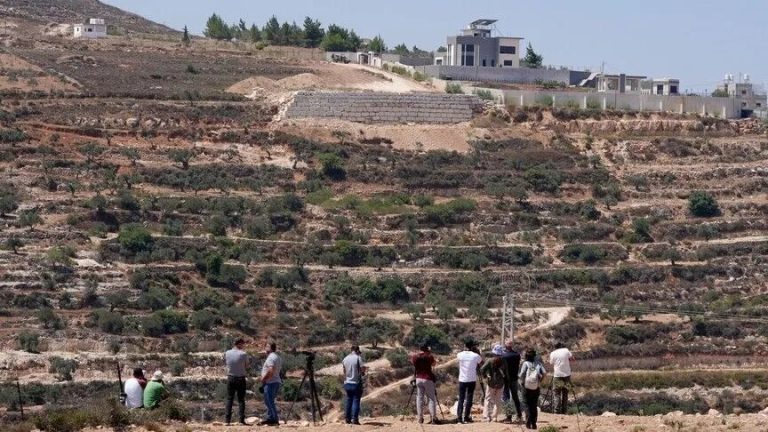
NABLUS, (Palestine Foundation Information Center), Israeli occupation forces (IOF) and settlers continued their siege of three Palestinian homes in the town of Qusra, south of Nablus, for the 13th consecutive day on Friday, amid attempts to impose new facts on the ground and seize control of the area under Israeli military protection.
Qusra Village Council head Abdul Azim Wadi confirmed that the IOF and groups of settlers continue to surround three homes in the Ras al-Ain area, preventing residents from entering or leaving while declaring the area a “closed military zone.”
Wadi said Israeli forces seized one of the homes and converted it into a military post while tightening restrictions on the besieged families, who are facing severe shortages of food and some medicines because essential supplies are being prevented from reaching them.
He said IOF on Thursday evening damaged and destroyed furniture and other belongings inside the seized home, which belongs to Palestinian resident Yousef Abdulsalam.
Wadi said Abdulsalam is now staying in another of the besieged homes after IOF forcibly expelled him and his family from their house on the grounds that the area had been declared a “closed military zone.”
The measures come amid continued escalation by IOF and settlers across areas south of Nablus.
13 days under siege
The siege began on August 9, when settlers erected a tent for surveillance and inspections near the homes of the Abu Rida and Hassan families on the summit of Ras al-Ain Mountain.
Settlers blocked roads leading to the homes with rocks and earth barriers and completely cut off water and electricity for eight days before the municipality was able to partially repair the networks.
Three Palestinian families, comprising around 15 people, including two children and several women, remain severely isolated amid acute shortages of medicine and food and strict restrictions on their movement.
Ras al-Ain Mountain is a vital area for Qusra and has become one of the few remaining open spaces available to residents after settlers took control of Ras al-Nakhil Mountain in the eastern area classified as Area C.
The mountain also holds strategic importance. Standing 930 meters above sea level, it overlooks the Mediterranean Sea to the west and Jordanian territory to the east and contains a major water spring.
The latest developments reflect a continuing pattern of attacks rather than isolated incidents. In February, settlers established a new pastoral outpost 300 to 500 meters from Palestinian homes, amid growing complaints of attacks and restrictions preventing residents from accessing their land.
On July 26, a mosque in Qusra was set on fire and Hebrew slogans were painted on its walls. The Israeli army claimed it opened an investigation after the suspects fled the scene.
The developments come amid a broader surge in Jewish settler violence across the occupied West Bank. According to UN data cited by the Associated Press, Qusra recorded more settler attacks in 2026 than any other Palestinian community in the West Bank, making it one of the areas hardest hit by escalating settler violence in recent months.