By Dr. Sabir Abu Maryam
Secretary-General, Palestine Foundation Pakistan
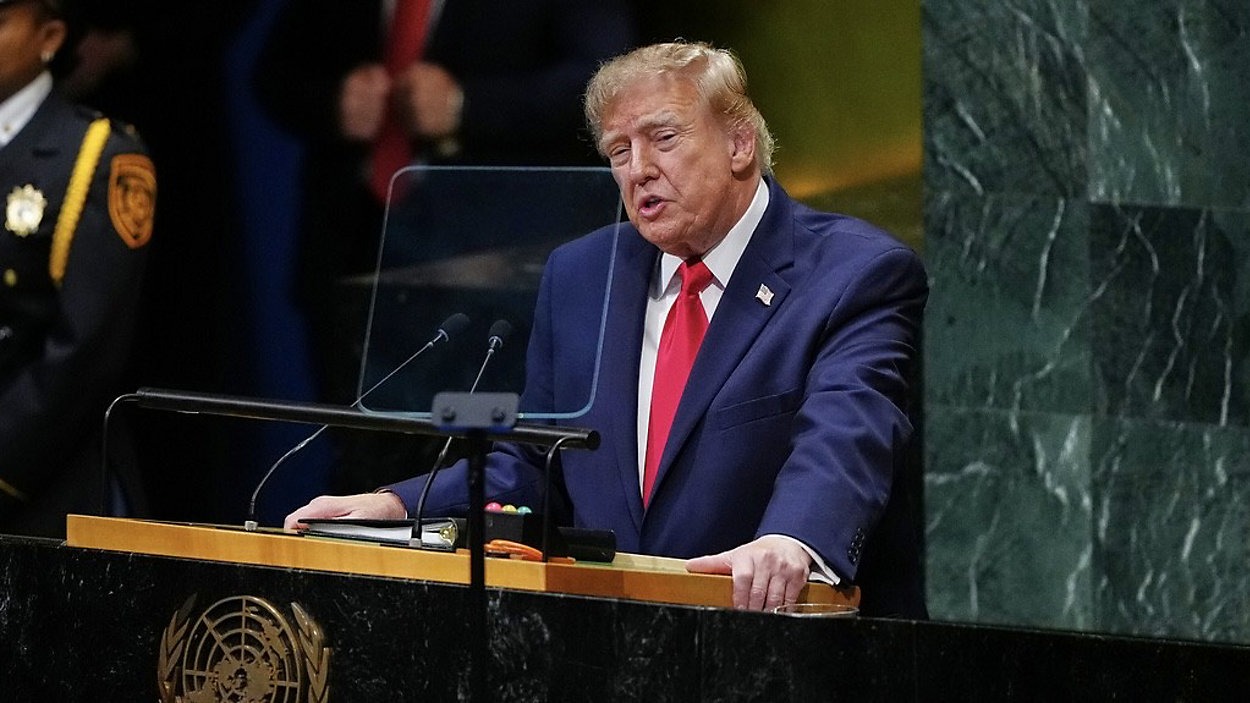
(Palestine Foundation Information Center), The 81st session of the United Nations General Assembly is currently underway, with heads of state from around the world addressing the gathering. On the very first day of the session, US President Donald Trump also delivered his address. Following the speech, a question arose for the world: how can a US president, speaking at an international institution established to promote peace, threaten to destroy a peaceful country and a three-thousand-year-old civilization such as Iran?
The reality is that Trump’s speech has left a dark stain on the history of the United States. By issuing open threats, he has, according to this view, demonstrated hostility toward global peace. Throughout his speech, alongside what critics described as false and fabricated claims, Trump also conveyed the impression that he does not respect other nations of the world.
Trump’s address to the UN General Assembly has also drawn strong criticism in the United States, with some critics describing it as one of the worst speeches in American history. American writer and director Andy Ostroy responded to Trump’s remarks against Iran by writing that only a “malignant, antisocial individual” would make such statements, and called on Americans to wake up and end what he described as madness on November 3.
Similarly, retired US Army Colonel Daniel Davis described President Trump’s speech at the UN General Assembly as shameful. He said it was perhaps one of the most unethical, embarrassing and insulting speeches ever delivered by a US president at the General Assembly.
According to Davis, Trump not only took credit, deceptively, for almost every positive development that has occurred so far, but also threatened another country with complete destruction—an act that, in Davis’s view, violates US law, the most basic moral principles and the US Constitution. “As an American, it is genuinely painful that such a person represents our country on the global stage,” he said.
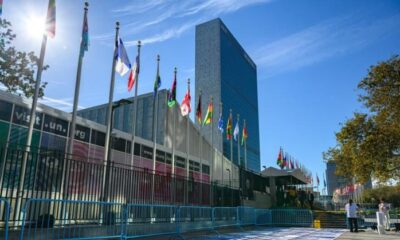
President Donald Trump’s recent address at the annual UN General Assembly, according to this analysis, represented a severe blow to international diplomacy and established global principles, as well as a serious setback for world peace. Trump delivered his remarks from a platform where diplomats from around the world gather with hopes of finding peaceful solutions to international conflicts and promoting peace and stability.
Rather than limiting his remarks to diplomatic discourse, he made claims concerning domestic political objectives and economic policies that critics described as detached from reality. He also openly threatened to completely destroy Iran, a sovereign state, and to “push it into hell,” statements that this article characterizes as a direct affront to international law and human civilization.
The claims made by the US president regarding American economic recovery and overwhelming military power, according to this article, are contrary to the facts. Trump claimed that the US military and economy had become stronger and more stable than ever and that America’s ammunition supplies were effectively unlimited.
However, according to figures cited from US defense experts and research institutions such as the Center for Strategic and International Studies (CSIS), prolonged wars and military interventions in the region have placed significant pressure on US inventories of smart missiles, Patriot air-defense systems and other critical defense supplies. On the economic front, the article argues that ordinary Americans continue to face the burden of inflation, rising costs and imbalanced economic policies, while verbal claims and misleading figures are being used to obscure these difficulties.
The US position regarding Iran’s nuclear program and international aggression is also presented as a combination of contradictions and disputed claims. In his UN address, President Trump described Iran as a nuclear threat and claimed that he had stopped Iran’s nuclear ambitions.
However, the article points to the 2015 Joint Comprehensive Plan of Action (JCPOA), under which Iran’s nuclear activities were subject to extensive monitoring by the International Atomic Energy Agency (IAEA). The article argues that Washington itself unilaterally withdrew from the agreement, undermining the diplomatic framework and contributing to greater uncertainty in the region.
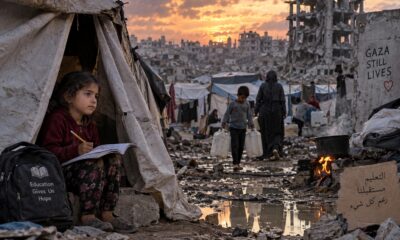
Similarly, claims regarding other diplomatic achievements and the so-called peace efforts in Gaza are described here as little more than verbal assertions and propaganda. According to this argument, conditions on the ground, continued bloodshed and international reports contradict claims that the US administration has pursued a consistently peace-oriented approach.
The most alarming aspect, according to this article, is that standing before one of the most powerful forums in the world and declaring an intention to destroy the Islamic Republic of Iran or undermine the future of generations represents a clear departure from diplomatic norms and global ethical standards.
Such statements, the article argues, go beyond ordinary diplomatic discourse and amount to threats of aggression. Article 2(4) of the UN Charter explicitly requires member states to refrain from the threat or use of force against the territorial integrity or political independence of any state. The article therefore argues that the United States should not consider itself exempt from these principles.
Statements threatening to destroy a sovereign country and eliminate the future of its generations constitute, according to this analysis, a direct challenge to human civilization and the principles of the UN Charter. The article argues that such conduct reflects an attempt to impose the law of force rather than international law.
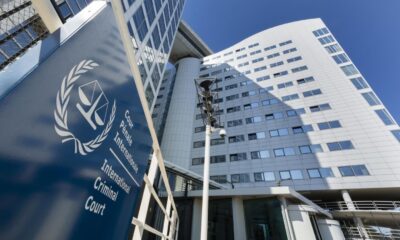
Such confrontational rhetoric, it further argues, can damage the credibility, dignity and authority of international institutions such as the United Nations and increase the risk of wider international conflict. The international community and the UN Security Council, according to the article, should take such threats and displays of military power seriously and call on Washington to refrain from actions and statements that could undermine international peace.
In conclusion, the article argues that the US president has continued an agenda that contributes to instability and confrontation around the world, while peaceful nations face threats of destruction and military attacks. It warns that if the international community fails to respond to what the author describes as threatening policies, the consequences could eventually extend beyond the countries currently affected.
The article concludes that such conduct also represents a troubling chapter in American history and that, according to the author, many Americans themselves view these developments with deep concern.