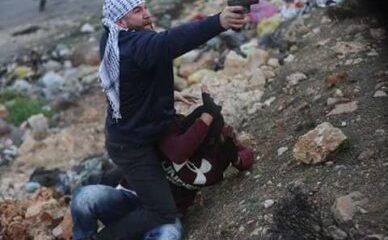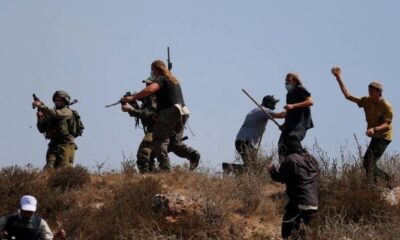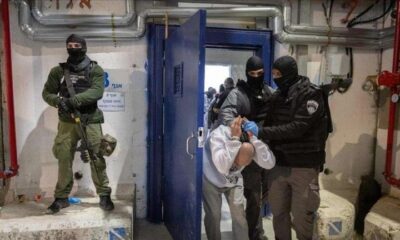
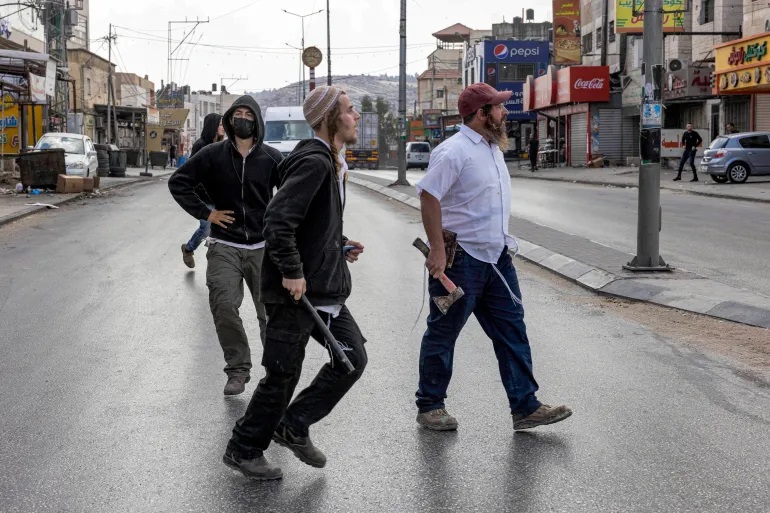
RAMALLAH, (Palestine Foundation Information Center), Four Palestinians were shot and injured Sunday evening during a Jewish settler attack, carried out under the protection of Israeli occupation forces (IOF), on the village of al-Mughayyir, northeast of Ramallah.
Local sources said groups of Jewish settlers attacked the village and Palestinian vehicles while Israeli occupation forces provided them protection, leading to confrontations.
The sources said four Palestinians were shot with live ammunition, including one in the foot and another in the abdomen. They were taken to a hospital for treatment.
Settlers also attempted to attack several homes, including the home of Palestinian resident Shaaban Abu Aliya, while others approached homes on the western side of the village.
2,256 attacks documented in July
According to the Wall and Settlement Resistance Commission, IOF troops and settlers carried out 2,256 attacks against Palestinians, their land and property during July.
The IOF were responsible for 1,458 of the attacks, while settlers carried out 798.
The commission said the attacks were concentrated in the governorates of Ramallah and al-Bireh, with 260 incidents, followed by Nablus with 247, Jenin with 190, Bethlehem with 185 and al-Khalil with 170.
The commission said the figures demonstrate clear coordination between Israeli military forces and settler violence, with the Israeli military providing protection and support that enables settlers to expand their attacks and turn their consequences into lasting realities on the ground.
4,560 settler attacks documented in 2026
The Palestine Information Center “Ma’ta” documented 4,560 attacks carried out by Jewish settlers across different areas of the occupied West Bank since the beginning of 2026, amid an escalation in settler violence.
The center documented 482 attacks in January, 409 in February and 490 in March.
It also recorded 698 settler attacks in April, 561 in May, 588 in June, 577 in July and 589 in August.
Hamas responds to settler violence
In an earlier statement, Hamas said the continued escalation in organized settler attacks against Palestinians, their property and land across the occupied West Bank is taking place with the direct support and protection of the Israeli government and Prime Minister Benjamin Netanyahu.
The movement said the attacks form part of a systematic plan to impose new settlement realities on the ground, accelerate annexation and displacement efforts, and pressure Palestinians to leave their land.
Hamas said Netanyahu, who it accused of leading a genocidal war against Palestinians in the Gaza Strip, is pursuing the same policies in the occupied West Bank by giving settlers greater freedom to carry out attacks.
The movement described the escalation as an extension of policies of killing, displacement and ethnic cleansing, and accused Netanyahu of exploiting settler violence for political and electoral purposes and to appease the far-right settler movement.
Hamas said public statements by Netanyahu and his government regarding settler attacks were merely an attempt to deflect criticism, contain growing international condemnation and ease foreign pressure while distancing themselves from responsibility for the violence.
The movement said the Israeli government continues to provide settlers with protection and cover, enabling them to carry out further attacks against Palestinians.
Hamas held the Israeli government fully responsible for organized settler violence and its consequences.
It called on the international community to move beyond statements of condemnation and take concrete measures, including imposing sanctions on Israeli leaders and violent settlers, pursuing networks that finance and support them, providing protection for targeted Palestinian villages and communities, and activating international accountability mechanisms over war crimes and ethnic cleansing against Palestinians.
The movement also called on the international community to take practical measures to stop settler attacks and hold those responsible accountable rather than limiting its response to statements of condemnation.