By Dr. Sabir Abu Maryam Secretary-General, Palestine Foundation Pakistan
(Palestine Foundation Information Center), The ongoing tensions in West Asia and the contradictory policies adopted by the US administration toward Iran have not only destabilized the region but have also triggered serious concern among political and defense experts inside the United States and across the West.
Political analysts appearing in American and Western media argue that US President Donald Trump made a historic mistake by launching a war against Iran—something previous American presidents had been unwilling to do. Commentators point out that although previous US presidents were powerful, they understood that Iran was not an easy target against which military superiority could be achieved without enormous costs.
American observers are also debating how Iran, despite four decades of economic and military sanctions, has significantly strengthened its military and defense capabilities. Recently, former US Navy officer Matt Bracken made a notable statement exposing what he described as the weakness of the American strategy, saying that President Trump had become trapped in a “Gulf quagmire.”
In an interview with an American television network, the former naval officer said that the Iranians were neither giving Trump a dignified way out of the war nor making it easy for him to declare victory and return home. He described the situation as extremely difficult for Trump, saying that no one knows what his next move will be because none of his plans in the Middle East appear to be moving in the desired direction.
Bracken’s remarks reflect a broader assessment now emerging among Western defense and geopolitical circles.
International and Western defense experts, including renowned American political scientist John Mearsheimer and Daniel Davis, senior fellow at Defense Priorities, have argued that the US administration has become entangled in a confrontation with Iran without a clear exit strategy. The initial objectives of the war, including weakening Iran’s influence or crippling its defensive capabilities, appear to be failing in practice. It has even reached a point where Iran is effectively determining the terms of the conflict, while the United States has been pushed into a reactive position.
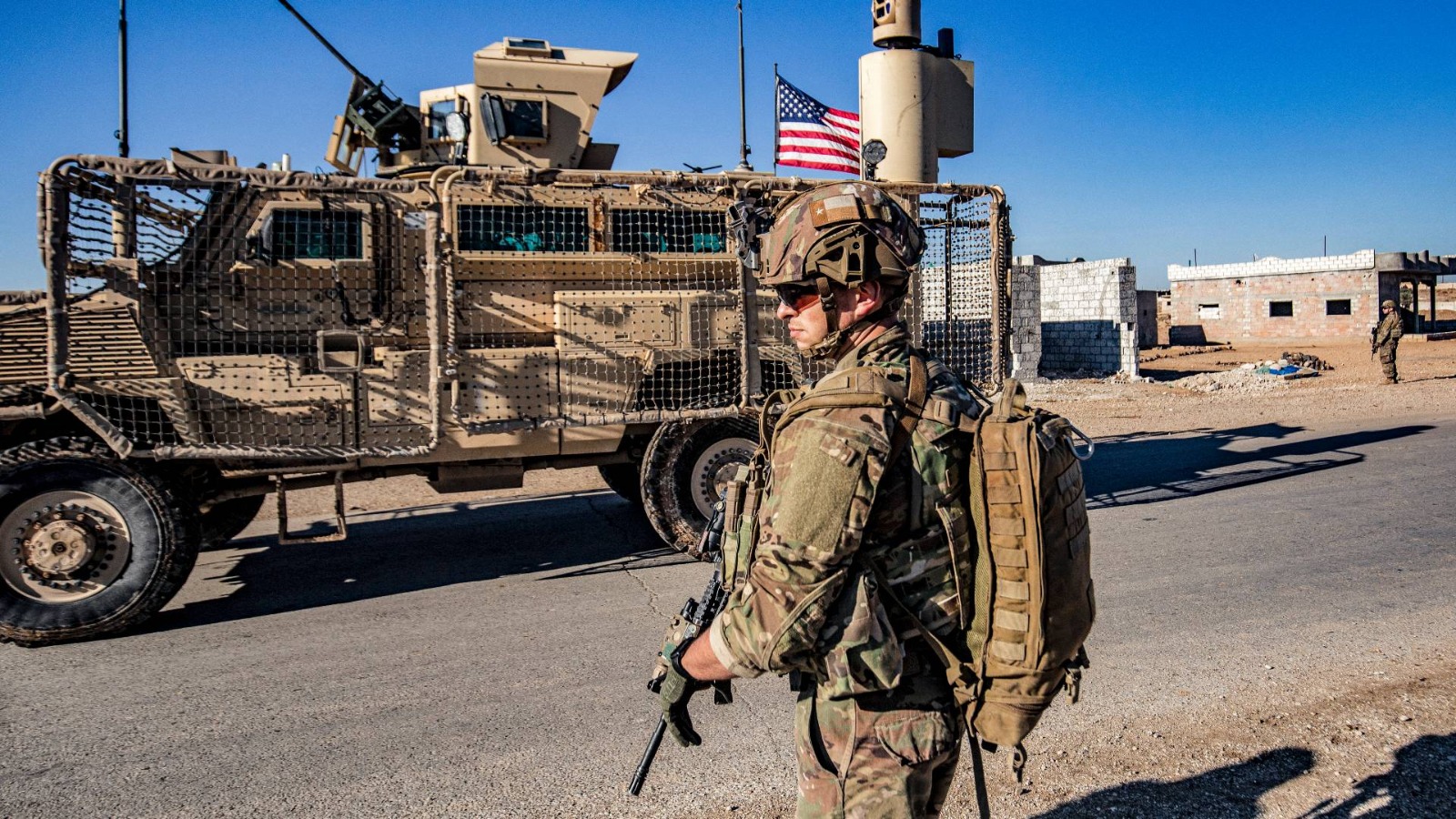
American and Western defense analysts further argue that the US military power, which Washington has historically used to intimidate and pressure governments around the world, has failed to achieve decisive results against Iran. The continued presence of American forces in the region is increasingly being viewed not as a demonstration of US strength but as a potential vulnerability.
According to Western military think tanks, demonstrating conventional military power is one thing, but declaring victory in an asymmetric conflict in a manner that the international community can accept has become extremely difficult for the US president. In other words, there is growing recognition in the United States that the Trump administration has suffered a serious political and strategic setback, while Iran, despite suffering human and material losses, has emerged from the confrontation with greater resilience.
Iran has responded to conventional pressure not by surrendering but by adopting a long-term strategy aimed at exhausting its opponent. Had another country been in Iran’s position, it might not have been able to withstand American pressure for such a prolonged period. This is particularly significant given that, shortly before launching the war against Iran, the United States had taken highly aggressive steps elsewhere and sought to project an image of overwhelming power.
The US government now appears trapped in a situation from which it is increasingly difficult to find a way out. Washington may have little choice but to consider Iran’s demands. Tehran has denied the United States an opportunity to claim an unequivocal victory. Although President Trump repeatedly makes statements suggesting that the Strait of Hormuz is under American control, the reality on the ground appears far removed from such claims. His statements are also being viewed with increasing skepticism because of what critics describe as repeated exaggerations and inaccurate assertions.
By maintaining tensions around the Strait of Hormuz and other major maritime routes, Iran has created significant uncertainty for the global economy and energy markets. Tehran has also sought to demonstrate that countries supporting what it considers US aggression could face consequences for assisting Washington.
Despite US sanctions and threats, Iran continues to exert pressure on American interests and their allies through its regional alliances, often referred to as the “Axis of Resistance.” Yemen is presented as one of the clearest examples. The conflict there has demonstrated the difficulties faced by US allies in achieving their strategic objectives, while retaliatory attacks by Yemeni forces have imposed significant human and economic costs on Saudi Arabia. From this perspective, the consequences represent not merely a setback for Saudi Arabia but also a challenge to US regional strategy.
In summary, prominent American and European policymakers and military analysts are increasingly highlighting what they regard as serious mistakes in Washington’s Iran policy. American defense experts argue that the United States underestimated Iran’s asymmetric warfare capabilities as well as its drone and missile technologies.
Some US and international policy institutions, including the RAND Corporation, Carnegie Endowment for International Peace, and International Crisis Group, have examined the enormous economic and strategic costs associated with prolonged military confrontation and the absence of a clearly defined end goal. Critics argue that such a conflict could place severe pressure on American military resources.
International political observers also contend that actions taken without broad congressional and allied support have weakened Washington’s position internationally.
According to analysts at the Center for Strategic and International Studies (CSIS), economic pressures inside the United States and rising oil prices have placed additional pressure on the Trump administration. The enormous cost of the war, economic instability, and the potential human and financial costs to American forces have contributed to growing public concern over another prolonged Middle Eastern conflict.
The views expressed by former US officer Matt Bracken and other Western analysts highlight the argument that Washington is currently caught in a Middle Eastern quagmire where neither a clear military victory nor an easy and dignified withdrawal appears possible.
Iran’s defensive resilience and what critics describe as America’s political and military miscalculations demonstrate that conventional military power alone cannot guarantee political or strategic victory. For the US administration, the remaining viable path may therefore be to acknowledge realities on the ground and pursue diplomatic solutions rather than relying solely on military pressure.