By Dr. Sabir Abu Maryam
Secretary-General, Palestine Foundation Pakistan
(Palestine Foundation Information Center), The US government, along with all American intelligence agencies, including the CIA, and President Trump, collectively decided to launch attacks on Iran. While this war against Iran is producing numerous consequences, one outcome is becoming increasingly evident: the aura of American power and its image as a superpower are also being reduced to ashes. This is not the first time in history that those who are weaker but steadfast in defending what they believe to be right have confronted American aggression. Whenever they have stood up to American oppression, the United States has faced humiliation and disgrace. The same is happening in the war against Iran. The myth of American military power and dominance has been shattered.
In reality, Iran has challenged the perception of American power and dominance through its resistance and steadfastness.
The United States imposed war on Iran with the aim of overthrowing the Islamic revolutionary system and installing a puppet government that would place Iran’s resources and mineral wealth at America’s disposal and accept subservience to Washington. The result, however, has been the opposite. Iran’s Supreme Leader Ayatollah Khamenei, along with military generals and commanders, has made the ultimate sacrifice, but Iran has not allowed America’s plans to succeed. After six months of resistance, Iran is demonstrating that it will not bow before the United States.
While Washington has failed to inflict on Iran the level of damage it had planned, Iran’s steadfastness and resistance have created serious economic and political problems for the American government. At the same time, US forces are facing severe difficulties at military bases across the Gulf and in Arab countries. These challenges are gradually becoming visible to the world.
Against the backdrop of escalating tensions and confrontation in West Asia, the unprecedented and tangible challenges facing the US military indicate that the ongoing conflict has severely undermined the Pentagon’s strategic calculations and operational capabilities. The US Navy’s logistical system has been crippled not only by the enormous distances involved but also because various American military assets—including carrier strike groups led by aircraft carriers such as the USS Abraham Lincoln and USS Gerald R. Ford, as well as military bases on land—are facing serious threats and potentially significant human and material losses.
The destruction and disruption of America’s demanding supply network have placed enormous pressure on the operational performance of its warships. The destruction on February 28 of a major logistics base in Bahrain, coupled with the threat of missile and drone attacks on nearby ports, has severely restricted the ability of US warships to obtain supplies locally. The need to transport fuel and food from distant locations such as Diego Garcia, approximately 2,200 miles away, and Singapore, around 3,700 miles away, has extended supply times to such an extent that the sustained operational deployment of these warships has become a major question.
Transferring supplies at sea with the assistance of cables and helicopters over distances of roughly 150 feet presents serious technical difficulties while simultaneously leaving both vessels vulnerable to anticipated attacks by their adversary.
This deteriorating logistical situation is having its greatest impact on strategic aircraft carriers such as the USS Abraham Lincoln and USS Gerald R. Ford. The US Navy has a total of 11 aircraft carriers, four of which have reportedly been deployed to the region against Iran, while several of the remaining carriers are tied up in long-term maintenance and repair.
It is also unprecedented for four American carrier strike groups to be engaged simultaneously against a single country. In the past, the deployment or arrival of American carrier groups was often enough to force governments to flee or fundamentally alter the political situation in entire regions. Iran’s resistance and steadfastness, however, have demonstrated that those days are gone—the days when America could arrive, strike, withdraw, and leave without facing a serious response.
Today, the reality is different: if America strikes, it must also be prepared to absorb a response that could be twice as severe.
The prolonged deployment of these extremely valuable and technically complex naval assets in a dangerous maritime environment, combined with continuing shortages of fuel and supplies, is undermining America’s maritime superiority. If even a single aircraft carrier were to suffer serious damage from advanced drones or hypersonic missiles, it would represent a major financial and strategic setback in US military history.
International social media, particularly American accounts, has been flooded with photographs and videos of the US carrier strike group centered around the USS Abraham Lincoln. The carrier has reportedly returned home from the Iran war, and images of its condition have shocked many Americans. Meanwhile, people around the world have mocked the vessel, describing it as a “rusting tin can” belonging to a country whose defense budget approaches one trillion dollars.
American citizens have pointed out that US aircraft carriers have returned from wars before, but they were never seen in such a condition. If the carrier has suffered such extensive damage, it is not difficult to imagine the hardships faced by the approximately 5,000 personnel stationed aboard it.
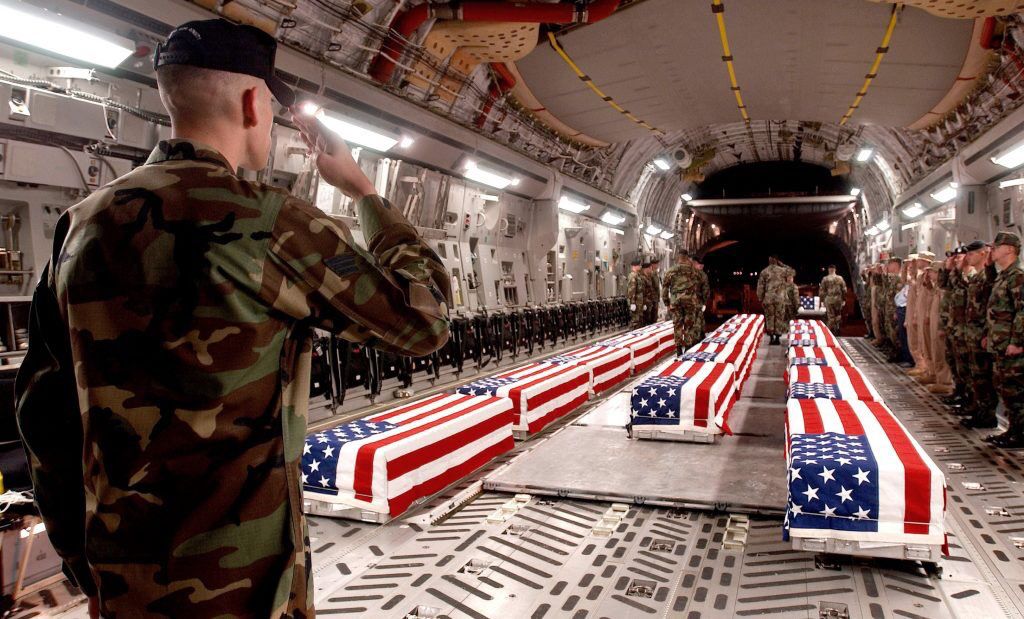
The pressure is not limited to the maritime front. American air and ground bases across the region are also facing severe challenges. Continuous rocket and drone attacks on US military installations and bases in Jordan, Iraq and other nearby countries have increased American military casualties and operational difficulties.
Recent attacks on US military bases in Jordan have reportedly damaged critical defense systems, radars and infrastructure, while the number of personnel killed and wounded has also continued to rise. These developments have had profound effects on the morale and psychological balance of American troops.
The physical and psychological hardships faced by nearly 20,000 sailors, Marines and other US personnel deployed at sea and stationed at ground bases are increasing day by day. Remaining on continuous combat alert, being forced to carefully ration food and fuel, and living under the constant threat of enemy attacks are creating severe psychological pressure on these personnel.
As supply lines weaken with each passing day and alternative supply routes become increasingly lengthy, the operational capacity and readiness of American forces are declining dramatically. This has raised concerns about further unexpected casualties and injuries.
In summary, the conflict and quagmire in West Asia have challenged America’s conventional assumptions regarding logistics, strategy and manpower. The insecurity of regional ports, supply lines extending thousands of miles, the vulnerability of strategic assets such as the Gerald R. Ford and Abraham Lincoln, and casualties and losses at bases such as those in Jordan all indicate that the US military has entered a prolonged and relentless crisis for which the Pentagon appears unable to find an immediate solution.