GAZA, (Palestine Foundation Information Center), A year after the ceasefire agreement came into effect in the Gaza Strip, a new tally by the Palestinian Center for Human Rights reveals that the relative calm imposed by the agreement did not put an end to Israeli violations or to the worsening humanitarian crisis, but rather attacks continued at a less intense pace, while basic life necessities remained out of reach for broad sectors of the Strip’s population.
In a report released by the Palestinian Center for Human Rights on 7 October 2026, coinciding with the passage of almost year since the ceasefire, it confirmed that the agreement reduced the frequency of attacks, but did not stop what it described as acts falling under the acts specified in Article Two of the Convention on the Prevention and Punishment of the Crime of Genocide.
During a year of the ceasefire, the report documented the martyrdom of at least 1,445 Palestinians and the injury of 5,072 others, while the martyrs tally up to 3 October included 312 children and 139 women.
It pointed out that the tally does not include all those missing under the rubble, nor deaths resulting from deprivation of basic necessities, noting that the tally of victims since the start of the Israeli attack on the Gaza Strip in October 2023 reached, according to the Ministry of Health, 74,228 martyrs and 175,188 injured.
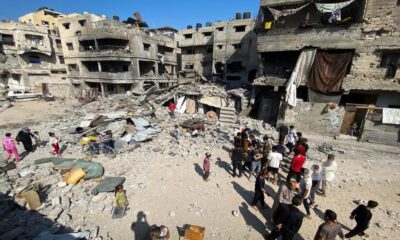
The report explained that the patterns of killing that prevailed during military operations continued during the ceasefire period, including bombarding homes over the heads of their occupants, targeting civilian gatherings, and killing displaced persons inside tents and shelter centers, as well as killings near what is known as the “Yellow Line” and restricted access areas.
It also documented the targeting of members of the civilian police and those in charge of maintaining order, alongside the killing of civilians while attempting to secure food and livelihoods.
Injuries without recovery
The effects of the war did not stop at the numbers of the dead, as the report confirmed the continuation of physical and psychological harm to the population, pointing to the recording of about 2,500 new injuries requiring rehabilitation during a year of the ceasefire.
Thus, the cumulative tally since October 2023 rose to about 43,000 injuries likely to alter the course of the lives of those affected, including cases of amputation, spinal cord injuries, brain injuries, and severe burns.
Many of the injured face difficult conditions after leaving hospitals, returning to tents or damaged buildings that do not provide an appropriate environment for recovery, amid a shortage of rehabilitation services, artificial limbs, and assistive devices.
Gaza has not entered “post-trauma”
The report considers that the population of the Gaza Strip has not actually entered a “post-trauma” phase, because the sources of trauma themselves remain standing.
Thousands of families are still waiting to know the fate of their missing sons and daughters, or to retrieve bodies from under the rubble, or to obtain approvals for their patients to travel, while other families await an opportunity to return to their homes or restore their source of income.
The report noted an assessment published in April 2026 showing moderate or severe signs of anxiety, fear, and loss of hope for the future among more than 60% of youth.
Sleep disturbances, fear, and social withdrawal also continue among children, coinciding with the exhaustion of health workers who provide treatment to others while they themselves face loss and displacement.
60,000 Palestinian children lost one or both parents
The report’s figures reveal the scale of the disaster that befell family structures in Gaza, with approximately 60,000 children who lost one or both of their parents, and more than 26,000 widows.
The loss of the breadwinner leaves surviving women with additional burdens related to care and securing basic needs, amid the absence of income, housing, and services, while children lose the sources of protection and stability they need.
According to the report, the continuation of these conditions throughout a year of the ceasefire kept grief, fear, and helplessness a part of daily life, and undermined the population’s ability to imagine a future where they can restore their lives.
Medical treatment, housing, and food: Restricted necessities of life
On the health front, the report showed that Israeli restrictions kept medical treatment, housing, food, and other requirements for survival out of reach for broad sectors of the population.
It pointed out that about 47% of essential medicines have run out, while the number of patients and wounded requiring treatment outside the Strip exceeded 20,000.
During the years of the war, 1,628 patients died while waiting for evacuation, while cancer, kidney, heart, and diabetes patients faced intermittent treatment dependent on the availability of medicine, fuel, and consumables, alongside Israeli approvals for patient travel.
As for housing, about 94% of the Strip’s population needed shelter assistance and non-food items in June 2026.
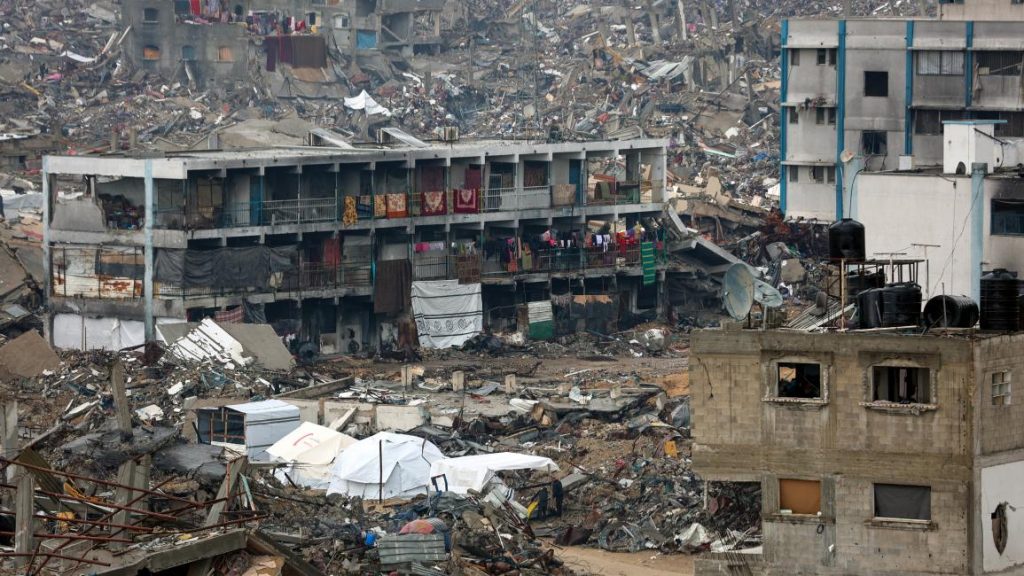
At the same time, about two-thirds of the Gaza Strip’s area remained under Israeli military control, confining the majority of the population to a limited geographic patch, where hundreds of thousands live in dilapidated tents or damaged and cracked buildings, amidst risks threatening their safety.
Aid: Gap between the agreement and reality
The report provides a reading of the movement of trucks entering the Strip during the period between 13 October 2025 and 16 August 2026, showing that the daily average did not exceed about 211 trucks, compared to an announced rate of 600 trucks within the agreement’s arrangements.
The daily average of aid trucks also decreased by about 41% when comparing the beginning of the monitored period with its end, coinciding with a noticeable rise in private sector trucks.
Families remained largely dependent on aid and community kitchens, at a time when bringing in fuel, raw materials, power equipment, and repair gear remained restricted, preventing the restoration of local capacity to produce food and provide job opportunities.
Exhausted economy and high unemployment
The economy was not immune to the effects of war, as the report showed a contraction of the Gaza Strip’s economy by about 5% in the first quarter of 2026 compared to the previous quarter, after the unemployment rate reached about 78% during the year 2025.
Factories, workshops, farms, and fishing boats remained unable to resume their activity due to destruction, access restrictions, and lack of equipment and production inputs.
Consequently, the availability of some goods in the markets was not enough to pull families out of their crisis, as loss of income drove families to reduce meals, go into debt, sell their remaining belongings, and even postpone medical treatment to cover daily needs.
Water, sanitation, and education: Endless crises
Restrictions extended to water and sanitation networks, waste management, and rubble removal, keeping the population near sources of pollution, disease, and war remnants, amid the impossibility of repairing services and operating them regularly.
In education, Gaza’s children were deprived of formal education for the fourth consecutive academic year, after large numbers of schools were destroyed or converted into shelter centers.
The educational process shifted to temporary spaces lacking the requirements for safe and appropriate education, at a time when the education crisis overlaps with hunger, displacement, injuries, and loss of income sources, increasing the risks of school dropout and involvement in the labor market, including child labor.
Difficulties also redouble for children with disabilities, given their limited access to education, rehabilitation services, and necessary support.
Call for international action
At the conclusion of its report, the Palestinian Center for Human Rights called on the international community to act to stop acts of genocide and protect the population of the Gaza Strip, demanding that states parties to the Convention on the Prevention and Punishment of the Crime of Genocide stop supplying Israel with weapons and ammunition, suspend any cooperation that could contribute to the continuation of crimes, and ensure compliance with provisional measures issued by the International Court of Justice.
It also demanded lifting the blockade, opening border crossings, securing the population’s needs, facilitating the evacuation of the sick and wounded, and bringing in materials and equipment necessary to repair housing and facilities, and restore services and livelihoods.
It further stressed the necessity of stopping displacement plans and the withdrawal of Israeli forces to allow the displaced a voluntary, safe, and dignified return to their areas, alongside supporting the prosecution of those responsible for crimes before the International Criminal Court and competent national courts, and ensuring redress for Palestinian victims.
Ceasefire year: No end to the crisis
According to what the report documents, the passage of a year since the ceasefire did not turn into a real beginning for a recovery phase in the Gaza Strip; killings continued, injuries accumulated, patients remained waiting for treatment, and hundreds of thousands remained without safe housing, while restrictions continued to affect food, water, health, education, and work.
The tally reveals that the ceasefire, despite reducing the level of military operations, did not end the conditions that made daily life in Gaza hostage to the humanitarian crisis, nor did it open the way for real recovery or a stable return to normal life.