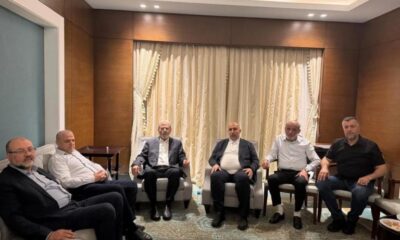
CAIRO, (Palestine Foundation Information Center), Palestinian factions are heading into a new round of talks in Cairo on Wednesday to discuss ending internal division and the possible inclusion of Hamas and Islamic Jihad in the Palestine Liberation Organization, bringing the issue of political partnership back to the forefront of Palestinian debate.
Palestinian sources told Al Jazeera that the meetings, scheduled for Wednesday and Thursday, include leaders from Fatah, Hamas, Islamic Jihad and the Popular Front for the Liberation of Palestine. The talks are expected to focus on restoring national unity and preparing the ground for Palestinian elections.
The meetings come days after Palestinian Authority President Mahmoud Abbas issued a decree setting simultaneous presidential and legislative elections for September 11, 2027, while canceling the previous legislative election date of November 28.
According to the PA presidency, the decision is intended to allow time for comprehensive national dialogue, address Israeli-imposed obstacles to holding elections, and ensure the participation of Palestinians in Jerusalem, the West Bank and Gaza.
These obstacles include restrictions on the movement of election staff and observers, as well as ongoing security and humanitarian conditions that hinder preparations for voting in Gaza.
Ahead of the Cairo round, Fatah’s Central Committee stressed, after a meeting in Ramallah on Tuesday, the importance of continuing dialogue with Palestinian forces and factions in a way that strengthens national unity and preserves the unity of Palestinian land and decision-making.
The inclusion of Hamas and Islamic Jihad in the PLO gives the dialogue a significance beyond election timing, raising questions about expanding representation within the main Palestinian national institution and mechanisms for participation in decision-making.
The issue is not new. The 2005 Cairo Declaration called for activating and developing the PLO to include all Palestinian forces and factions. Later reconciliation understandings also raised the need to rebuild PLO institutions and elect a new Palestinian National Council, but comprehensive partnership has not been achieved.
The current round joins a long series of reconciliation attempts, including the Cairo agreements of 2011 and 2017, which failed to end the Palestinian division.
The key test now is whether participants can turn understandings into clear steps and implementation mechanisms that allow real institutional partnership and make the election delay an opportunity for broader national consensus rather than another stage of postponement.