RAMALLAH, (Palestine Foundation Information Center), The Palestinian Central Bureau of Statistics announced that the number of Palestinians in the world reached about 15.5 million people by the end of 2025, at a time when the Palestinian society faces an exceptional demographic and humanitarian situation due to demolition, forced displacement, systematic eviction, and the repercussions of the continuous Israeli aggression.
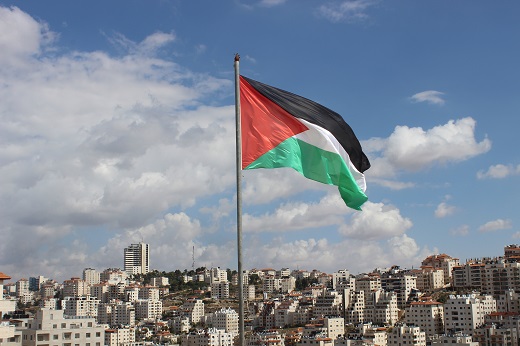
The Bureau explained, in a statement issued on the occasion of World Population Day, in cooperation with the National Population Committee, which falls on July 11, that about 5.56 million Palestinians live in the State of Palestine, 6.82 million in Arab countries, 1.86 million in the 1948 territories, in addition to about 1.26 million Palestinians in foreign countries.
It indicated that the Palestinian society remains a young society despite the tragedy, as the population under the age of 30 constitutes about 65% of the total population, while the percentage of those under the age of 18 is about 43%. The population growth rate in Palestine recorded 2.4% in 2023, compared to 1.5% in Arab countries and 0.85% globally.
Aggression toll
The Bureau showed that the toll of the Israeli aggression on the Gaza Strip since October 2023 until June 2026 reached 73,090 martyrs in the Gaza Strip, including 20,413 children and 12,524 women, in addition to 137,550 injured and more than 11,000 missing. In the West Bank, 1,162 citizens were martyred during the same period.
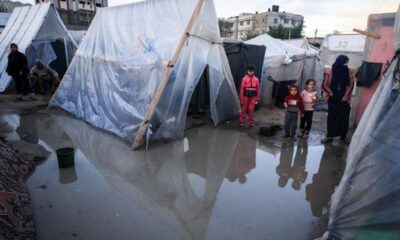
It pointed out that forced displacement affected more than two million people in the Gaza Strip, out of its total population of about 2.2 million, while about 40,000 Palestinians were displaced in camps in the northern West Bank.
High fertility
The Bureau pointed out that the fertility rate in Palestine reached 3.8 births per woman during the period 2017-2019, compared to about three births per woman in Arab countries, and 2.4 births per woman globally. Regarding women, the data showed that 47,019 women in the Gaza Strip became widows until May 2026, while women head about 18% of households, compared to 12% before the aggression. Also, about 60,000 pregnant women were deprived of regular healthcare in the Gaza Strip during 2026.
The maternal mortality rate rose to 17.4 deaths per 100,000 live births before the aggression, to reach 145 deaths in 2024 after the aggression. In the West Bank, the maternal mortality rate decreased from 18.6 deaths per 100,000 live births in 2023 to 6.7 deaths in 2024.
58,000 children lost one or both parents
According to the Bureau, about 58,000 children in the Gaza Strip lost one or both parents, in an indicator that reflects the scale of the social and humanitarian repercussions left by the aggression, and the resulting long-term challenges related to protection, psychological, and social care.
Collapse of the health system in Gaza
The data showed that only 18 hospitals are working partially out of 36 hospitals in the Gaza Strip, while more than 1,700 of the health cadres were martyred, and 1,312 of the workers in the health sector were arrested. Also, the number of hospital beds decreased from 3,412 beds to 1,717 beds, while the shortage in medicines reached about 51%, and the shortage in medical consumables reached 71%.
The Bureau pointed out that about 53% of the area of the Gaza Strip has become a military buffer zone, while the population density is concentrated in a limited area of approximately 36% out of 365 square kilometers, which is the area of the Strip, which raised the population density to more than 35,000 people per square kilometer.
The aggression hits the education sector
In the education sector, 20,480 students were martyred, including 19,101 school students and 1,379 university students, in addition to the martyrdom of 31,436 students and members of the educational cadres, according to the data contained in the report. The Bureau indicated that 700,000 male and female students were deprived of school education, while 88,000 university students were deprived of continuing their education, and 95% of schools suffered damage, and 284 schools were damaged, including schools that were completely destroyed.
In the West Bank, 128 school students and 39 university students were martyred, and 861 school students and more than 287 university students were injured, while 421 school students and more than 487 university students were arrested.
Record unemployment and unprecedented famine
The unemployment rate in the West Bank reached 29% during the year 2025, while it exceeded 80% in the Gaza Strip, in light of the collapse of the labor market and the cessation of economic activities. The Bureau warned of an unprecedented famine disaster in the Gaza Strip, pointing out that the official announcement of the famine was on August 15, 2025, and that 77% of the population, meaning about 1.6 million people, suffered from acute food insecurity.
Also, 98.5% of agricultural lands lost their capacity for production or became inaccessible, while the number of children expected to suffer from acute malnutrition rose to 101,000 children under five, in addition to 55,500 pregnant and breastfeeding women vulnerable to acute malnutrition during the years 2025 and 2026.
Widespread destruction in buildings and infrastructure
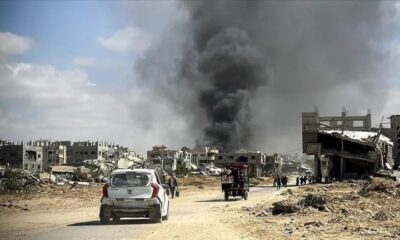
The Bureau showed that the aggression caused widespread damage to buildings and infrastructure, as more than 198,000 buildings were damaged, including more than 102,000 buildings totally destroyed, and more than 70,000 housing units completely destroyed. Also, hundreds of educational, health, and service buildings and facilities were damaged, in light of widespread destruction of basic infrastructure and service networks.
The Central Bureau of Statistics stressed that these indicators reflect a deep demographic and humanitarian transformation faced by the Palestinian people, emphasizing that securing food, health, education, and protecting the family structure have become basic conditions to speak about population stability or sustainable development paths.