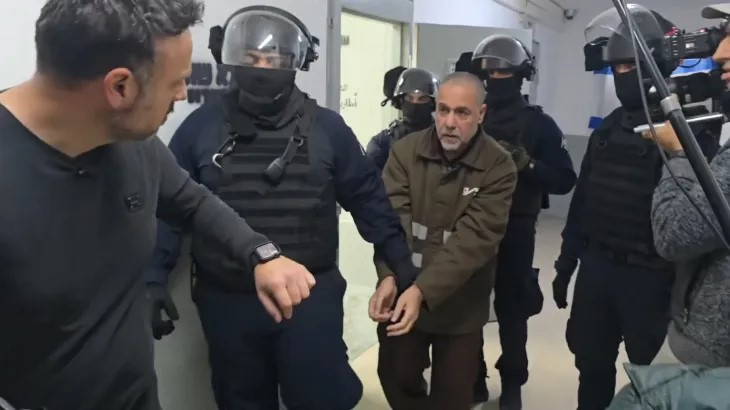
NEW YORK, (Palestine Foundation Information Center), The United Nations Human Rights Council (UNHRC) on Monday called on Israel to immediately release Dr. Hussam Abu Safiya, director of Kamal Adwan Hospital in northern Gaza, describing his detention as “arbitrary.”
In a statement, the UNHRC said Israel’s detention of Dr. Abu Safiya violates several provisions of the Universal Declaration of Human Rights as well as another major international human rights treaty.
The UNHRC also expressed concern that Israel may be engaging in the widespread and systematic use of arbitrary detention.
On Saturday, the Physicians for Human Rights organization warned that Dr. Abu Safiya’s health has deteriorated significantly following his transfer to the Rakevet wing of Nitzan Prison in the city of Ramla.
The rights group said its attorney, Nasser Odeh, documented serious injuries and signs of physical assault, along with breathing difficulties and repeated episodes of loss of consciousness during a visit with Dr. Abu Safiya on July 2.
According to the attorney, Dr. Abu Safiya was brought to the meeting with his hands and feet shackled and surrounded by masked prison guards. He had severe, recent bruises and injuries to his head, around his eyes, ears, and neck, making him difficult to recognize.
Meanwhile, Israel’s Supreme Court on Sunday gave the government until Tuesday, July 7, to disclose Dr. Abu Safiya’s medical condition.
The court ordered the Israeli government to respond to a petition filed by Physicians for Human Rights seeking the release of 14 Palestinian doctors from Gaza who are being held by Israeli authorities without charge or trial.
The court also requested that the Israeli government’s response address the “serious allegations” concerning Dr. Abu Safiya’s life and well-being.
Israeli forces arrested Dr. Abu Safiya on December 27, 2024, during a military raid on Kamal Adwan Hospital, while the facility was operating under wartime conditions.
Dr. Abu Safiya suffers from chronic health conditions, including heart disease and high blood pressure. His health has worsened during his detention, prompting renewed calls from UN bodies, international human rights organizations, and medical groups to ensure his safety and provide him with the medical care he requires.