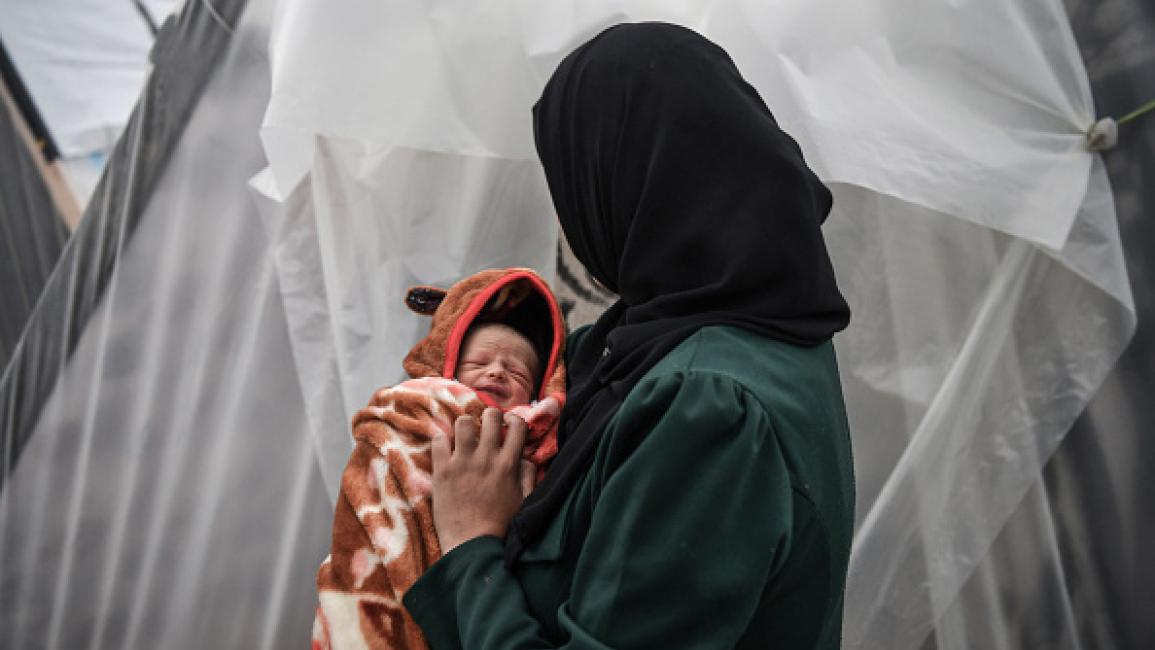
GAZA, (Palestine Foundation Information Center), The Gaza Center for Human Rights said on Friday that newly released official data from Gaza’s Health Ministry, along with figures published by Palestine newspaper on birth and miscarriage rates since the start of Israel’s military assault in October 2023, point to a systematic pattern of “reproductive violence” that amounts to a distinct crime within the broader genocide in Gaza.
In a statement, the center said the figures show a sharp and unprecedented decline in live births in Gaza in recent months, far beyond any natural drop that could be linked to the conditions of Israel’s genocide.
According to the data, April 2026 saw a steep fall in the number of live births, with only 2,004 babies recorded, a 67% decline from November 2025, when 6,076 children were born.
The decline has been visible since the beginning of 2026. Gaza’s Health Ministry recorded 5,210 births in January, falling to 3,433 in February, 3,233 in March and 2,004 in April. The Interior Ministry later reported only 1,701 births in May.
Birth rates in Gaza have been falling since 2023, the year Israel began its genocide. The number of births stood at about 57,000 in 2022, dropped to 54,000 in 2023, and then fell to 38,000 in 2024, a sharp decline compared with prewar levels.
Alongside the collapse in birth rates, the data show a major rise in miscarriages that cannot be explained by natural factors, the center said.
Gaza’s Health Ministry recorded 921 miscarriages in April 2026 alone, equal to 460 miscarriages per 1,000 live births, or 46% of registered pregnancies.
Miscarriages reached around 6,000 throughout 2025, while monthly figures in 2026 have ranged between 500 and 600. The center said this represents a 225% increase compared with prewar natural rates, far exceeding what would be expected even in the harshest conflict environments.
The center said these figures reveal an extremely dangerous dimension of the genocide, extending beyond direct killing to the targeting of the Palestinian community’s biological ability to survive and renew itself.
It said these indicators cannot be separated from the wider context of more than 32 months of genocide, including the systematic destruction of the health system, repeated attacks on hospitals, and the denial of food, medicine and basic health care.
From a legal perspective, the center noted that Article II of the Convention on the Prevention and Punishment of the Crime of Genocide defines genocide as including “imposing measures intended to prevent births within the group.”
The center said such measures do not have to take the form of forced sterilization or direct medical procedures. They can also be carried out by creating living and health conditions that effectively undermine the targeted group’s ability to reproduce and continue.
In Gaza’s case, the center said the sharp fall in births and the unprecedented rise in miscarriages should be assessed in light of several overlapping actions that have directly affected reproductive health.
These include the widespread destruction of hospitals, primary care centers, maternity wards and fertility treatment facilities, as well as the killing, detention and targeting of medical staff.
Together, these actions have caused the collapse of maternal and child health care services and blocked the entry of essential medicines and medical supplies needed for pregnant women and newborns.
The center also cited mass starvation and severe malnutrition, which increase the risk of miscarriage, premature birth and pregnancy complications.
It said repeated forced displacement and the forcing of pregnant women to live in inhumane conditions lacking minimum privacy and health care also constitute serious contributing factors.
Continuous trauma, fear and insecurity are also medically linked to higher risks of miscarriage and complications during pregnancy.
The center further pointed to Israeli attacks on infertility and assisted reproduction centers, including the destruction of frozen embryos in some medical facilities, saying this directly affects the right to have children.
The Gaza Center for Human Rights said these demographic indicators show a direct Israeli assault on the future of Palestinian society and its population structure.
It stressed that genocide is not limited to ending the lives of people who already exist, but also extends to undermining a group’s ability to reproduce itself and continue across generations.
The center said that, when viewed cumulatively and in their broader context, these practices provide additional evidence of one of the material elements of the crime of genocide: imposing measures intended to prevent births within the Palestinian group in Gaza.
It added that these acts are accompanied by other evidence related to the legally required special intent: the intent to destroy the Palestinian group, in whole or in part, as a national group.
The rights group called on the international community to treat the sharp decline in birth rates and the rise in miscarriages as indicators requiring an independent international investigation.
It said such an investigation should examine whether Israeli policies and measures have deliberately contributed to preventing births within the Palestinian group in Gaza, one of the acts explicitly listed in the Genocide Convention.
The center stressed that international responsibility is not limited to stopping military attacks. It also includes urgently restoring reproductive health services, ensuring the entry of medical and food supplies needed for pregnant women and newborns, and holding accountable those responsible for policies that have led to this unprecedented deterioration in Gaza’s reproductive health and demographic indicators.