
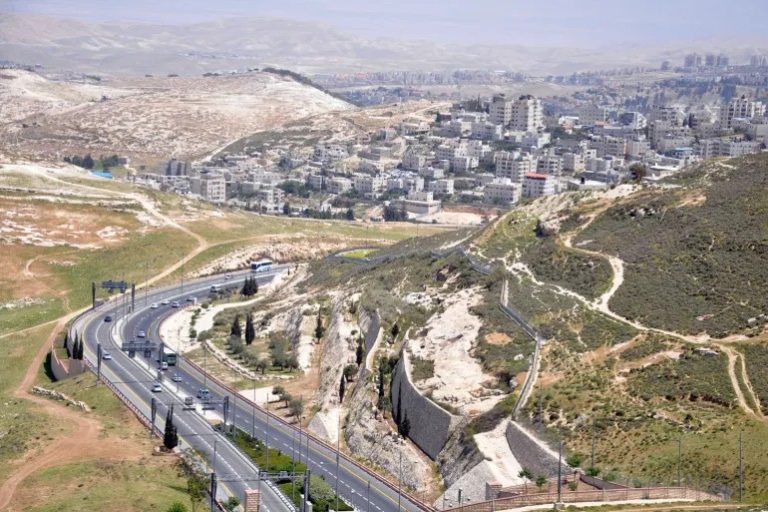
WEST BANK, (Palestine Foundation Information Center), The Israeli occupation authorities have advanced nine settlement plans across the occupied West Bank since the beginning of July, approving and depositing them as part of a systematic policy to expand Israeli settlements through both geographic expansion and increased construction within existing settlements.
According to the latest data, Israeli authorities continue to invest in established settlements while accelerating the legalization of previously approved settlement outposts. The plans allocate more than 1,069 dunums of Palestinian land for settlement expansion and include 1,024 new settlement units, comprising 455 units that have received final approval and 569 units deposited for the completion of the planning process.
Northern West Bank becomes a settlement focus
Settlement expansion has intensified in the northern occupied West Bank with the approval of a plan to expand the Mevo Dotan settlement by 455 housing units on nearly 539 dunums of land belonging to the town of Arraba, south of Jenin.
The expansion aligns with broader developments in the area over recent months, including intensified Israeli military operations, infrastructure projects, and the rehabilitation of nearby settlements, reflecting a growing strategic focus on the northern West Bank within Israel’s settlement agenda.
Major expansion planned in al-Khalil
In the southern West Bank, al-Khalil Governorate has emerged as another major target of settlement expansion after Israeli authorities deposited two large-scale plans for the Beit Hagai settlement and Asael, an outpost officially recognized as a settlement in early 2023.
The two projects would add 567 settlement units across more than 519 dunums of Palestinian land, reinforcing settlement blocs in the southern West Bank and further integrating them into Israel’s road and infrastructure network. The plans are expected to strengthen Israeli control over additional Palestinian land while further restricting Palestinian urban development.
Reshaping existing settlements
The expansion plans extend beyond the construction of new housing units. They also include extensive revisions to settlement planning regulations, such as modifying building lines, converting commercial land for residential use, updating construction regulations, and changing land marketing and parcel division procedures.
Although these measures appear technical, they effectively increase settlement density and maximize the use of existing settlement land, reducing the need for future land expropriation while enabling continued population growth.
The plans illustrate how Israeli settlement policy has evolved beyond residential construction into a comprehensive strategy for reshaping the Palestinian landscape. By expanding existing settlements, modernizing their planning frameworks, and integrating them into Israel’s infrastructure network, the policy further restricts Palestinian communities, which continue to face severe limitations on planning and development. Critics said that this planning strategy has become a central mechanism for entrenching Israel’s de facto annexation of occupied Palestinian territory.