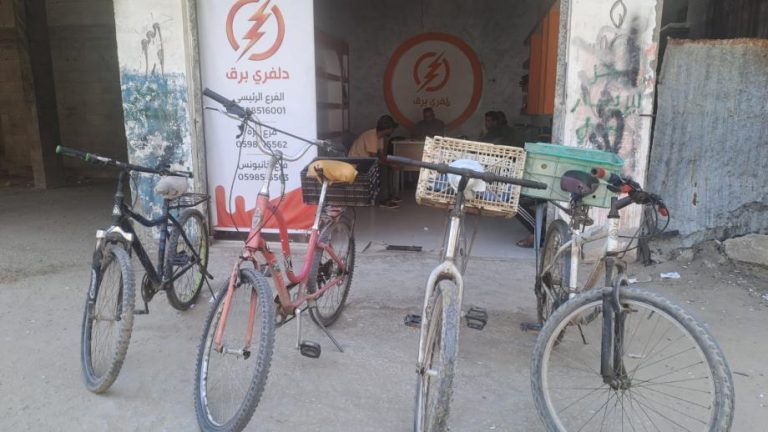
GAZA, (Palestine Foundation Information Center), Bicycles have become the primary means of transportation in the Gaza Strip after fuel shortages and widespread destruction left most other forms of transport inoperable. However, a severe shortage of spare parts and soaring prices have created a new challenge for thousands of Palestinians who rely on bicycles for daily travel and to earn a living.
Owners of bicycle repair shops say spare parts have become extremely scarce, and when available, they are sold at prices beyond the reach of most residents. Parts that once cost only a few shekels now sell for several times their previous price, while others cost hundreds of shekels despite being difficult to find.
Repair shop workers say the shortage has significantly reduced their ability to meet customers’ needs at a time when dependence on bicycles has sharply increased due to the lack of alternative transportation. To cope, many mechanics have resorted to reusing damaged parts or modifying old components to extend their lifespan and keep more bicycles operational.
Residents also face deteriorating road conditions. Damaged and uneven streets cause frequent breakdowns and accelerate wear and tear, increasing the need for repairs while essential maintenance supplies remain unavailable.
Many bicycle users say they search across the Gaza Strip for replacement parts, often without success. Those who do find them frequently cannot afford the inflated prices.
Repair shop owners and residents are calling on relevant authorities to address the crisis, stressing that bicycles have become Gaza’s transportation lifeline, enabling people to reach their workplaces and deliver goods to homes and displacement shelters.
With Israeli authorities continuing to restrict the entry of fuel needed to operate vehicles, bicycles have emerged as a practical alternative to the transportation crisis, serving both as a means of travel and a source of income despite the growing maintenance challenges.
Gaza’s Ministry of Transport has previously warned that the transportation crisis continues to worsen, citing extensive damage to roads and vehicles, combined with severe fuel shortages, which have drastically reduced public transportation services and forced residents to rely increasingly on bicycles.